
Why Doctors Use Ultrasound So Often
When a woman walks into the clinic worried about a lump, a strange heaviness or a change she can’t explain, one of the first tests a doctor usually suggests is an ultrasound. Not because something serious is suspected, but because ultrasound gives a clear, calm look inside the breast without any discomfort. It shows real time images, which means the doctor can immediately understand whether the change is harmless or needs more attention. A breast ultrasound scan often becomes the first step simply because it answers the question every woman has in her mind: what exactly is going on in there.
How Ultrasound Helps When Symptoms Feel Confusing
Breast symptoms are tricky. A woman may feel soreness one day and nothing the next. The pain may be dull, sharp, random or linked to the menstrual cycle. Most of these patterns fall under everyday breast pain reasons, but it is hard to know that without looking deeper. That is where ultrasound becomes extremely useful. It allows the doctor to see the texture, density and behaviour of the tissue in a way hands alone cannot. Sometimes the scan shows a tiny fluid filled cyst. Sometimes it shows normal hormonal swelling. Sometimes it shows something that needs further evaluation. The point is, ultrasound removes guesswork.
Understanding What Lumps Look Like on Ultrasound
Nothing creates anxiety faster than finding a lump. Even if the lump is small, the worry can take over a woman’s entire day. Ultrasound helps break that fear by showing what the lump actually is. A cyst looks black and fluid filled. A fibroadenoma looks smooth and well defined. Infections look completely different. Cancerous tissue has its own specific pattern. Doctors study these differences carefully to understand the nature of the lump. This is one reason younger women benefit so much from ultrasound, because dense breast tissue can hide things during physical examination, but ultrasound sees through it clearly.
How Ultrasound Supports Early Detection
Breast cancer in its earliest stage is often silent. There may be no pain, no lump you can feel and no obvious change in shape. The early signs of breast cancer are not always visible from the outside, which is why imaging matters. Ultrasound adds another layer to diagnosis. It helps highlight unusual textures or shadow like areas that might need follow up. It also helps confirm when something is harmless, which is just as important for a woman’s peace of mind. When ultrasound and mammography work together, the chances of finding a problem early rise significantly.
A Test That Feels Comfortable and Easy
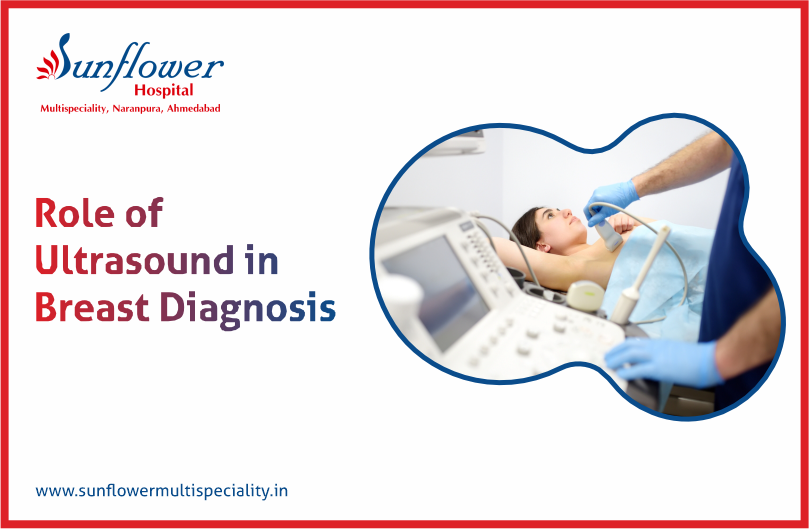
A big reason women prefer ultrasound is the experience itself. There is no pressure, no squeezing and no painful moments. The process feels more like an examination than a test. A warm gel is spread over the skin and the doctor slowly moves a small probe around the breast. You can usually watch the screen if you want to understand what is being seen. Many women say this immediate insight helps reduce their anxiety, because they feel included in the process instead of waiting in silence for a report.
How Doctors Decide the Next Step After Ultrasound
Once the images are reviewed, the doctor explains what they see. If the scan shows something clearly harmless, the next step might just be routine monitoring. If something looks unusual or unclear, the doctor may suggest an additional test or a biopsy, not to confirm the worst, but to be sure of the diagnosis. Ultrasound guides these decisions. It tells the doctor whether to relax, whether to watch or whether to investigate further. That guidance is what makes ultrasound such an important tool in breast diagnosis.
Why Ultrasound Will Always Be a Key Part of Breast Care
Ultrasound does not replace mammography, and mammography does not replace ultrasound. Both have strengths, and when combined, they give a clearer picture than either one alone. Ultrasound is safe, comfortable and reliable. It helps women understand their symptoms and helps doctors make accurate decisions. Most importantly, it gives women clarity at a time when fear is at its highest. And clarity is often the most healing thing of all.