This page gives general health information. It is not a substitute for examination or advice from a registered medical practitioner.
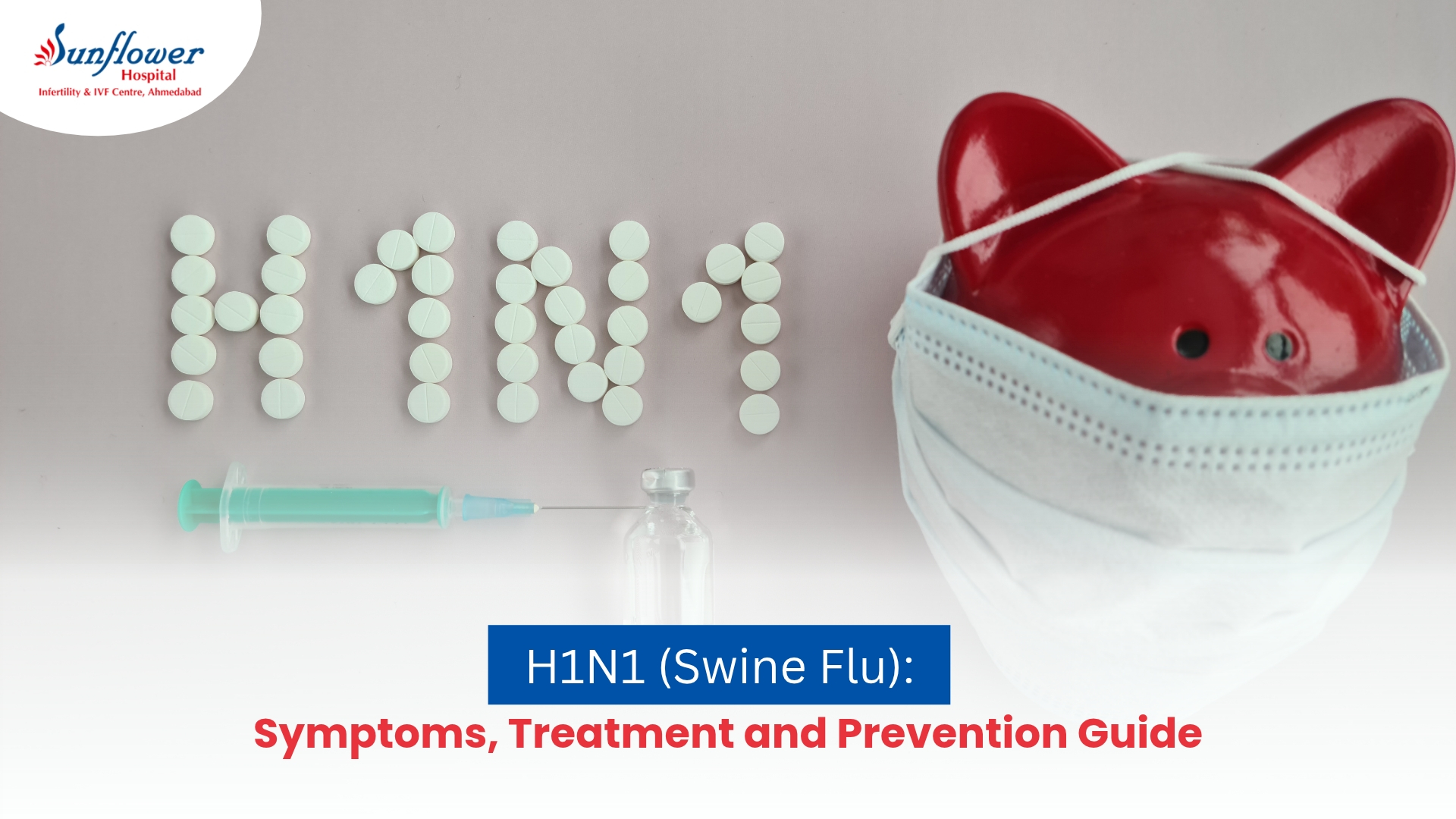
A sudden fever, a cough that will not go away, and body aches that make ordinary tasks hard can all point to influenza. H1N1, often called swine flu, is one type of influenza A virus. It caused a pandemic in 2009 and has since become one of the flu viruses that circulate every year.
The symptoms look like many other infections, especially in the monsoon when dengue and other fevers are common. This guide explains the symptoms, how H1N1 differs from a cold, COVID-19 and dengue, how it is treated, how to prevent it, and which warning signs mean you should go to a hospital.
What is H1N1 swine flu?
H1N1 is a subtype of influenza A that infects the nose, throat and lungs. It is not a separate illness from the flu. It is one of the viruses that cause it.
The name “swine flu” is outdated. The virus now spreads from person to person like other seasonal flu viruses, and you cannot catch it from eating pork. It spreads through droplets when an infected person coughs, sneezes or talks, and through touching contaminated surfaces and then your face.
Cases in India are often reported during the monsoon and winter months. For current local advice, check the Gujarat health department or the National Centre for Disease Control (NCDC).
Symptoms of H1N1 swine flu
Symptoms usually come on suddenly, one to four days after exposure. You might feel fine in the morning and have a fever, headache and heavy tiredness by the evening.
- Fever and chills (not everyone has a fever)
- Dry cough
- Sore throat
- Runny or blocked nose
- Headache
- Muscle and joint pain
- Tiredness and weakness
- Vomiting or diarrhoea, which is more common in children
Most people feel better in about a week. Cough and tiredness can last two weeks or more.
Flu vs cold vs COVID-19 vs dengue
You cannot tell these apart reliably by symptoms alone. This table shows the usual pattern. A doctor may order tests to be sure.
| Flu (including H1N1) | Common cold | COVID-19 | Dengue | |
|---|---|---|---|---|
| Start | Sudden | Gradual | Gradual or sudden | Sudden |
| Fever | Common, often high | Uncommon or mild | Common | Common, high, lasts several days |
| Cough | Common, dry | Mild | Common | Not typical |
| Runny or blocked nose | Sometimes | Very common | Sometimes | Not typical |
| Sneezing | Uncommon | Common | Uncommon | No |
| Body aches | Strong | Mild | Common | Severe, including joint pain |
| Headache | Common | Mild | Common | Severe, often with pain behind the eyes |
| Loss of taste or smell | Uncommon | Uncommon | Can happen | No |
| Rash | No | No | Rare | Can appear, often after a few days |
| Season | Monsoon and winter | Any time, more in cooler months | Any time | Monsoon and post-monsoon |
| Usual test | RT-PCR from a nose or throat swab | Usually none needed | RT-PCR or rapid antigen | NS1 (early), antibody tests, platelet count |
If you have a fever in the rainy season, do not assume it is just flu. See a doctor if the fever lasts more than two to three days.
Warning signs: when to get urgent help
Go to an emergency department or call for emergency help if you notice any of these.
| Who | Warning signs |
|---|---|
| Adults | Difficulty breathing or shortness of breath; chest pain or pressure, or pain in the abdomen; sudden dizziness or confusion; severe or non-stop vomiting, or being unable to keep fluids down; fever or cough that gets better and then comes back worse |
| Children | Fast breathing, trouble breathing, or the ribs pulling in with each breath; blue or grey lips or face; not drinking enough, or no urine for many hours; very hard to wake, not responding, or so irritable that they do not want to be held; fever with a rash, or a fever that goes away and then returns with a worse cough |
| Anyone | Any of the signs above along with a high-risk condition, such as pregnancy, diabetes, or heart or lung disease |
If you are unsure whether your symptoms are serious, seek medical advice.
Who is at higher risk?
Some people are more likely to become seriously ill and should see a doctor early, even for mild symptoms:
- Children under 5, especially under 2
- Adults aged 65 and over
- Pregnant women, and women in the two weeks after delivery
- People with asthma, lung disease, heart disease, diabetes, kidney or liver disease, or nerve and muscle disorders
- People with a weak immune system
- People with severe obesity
Pregnancy: flu can be more serious in pregnancy. Tell your doctor early if you have flu symptoms. Treatment should not be delayed, and the flu vaccine is considered safe in any trimester.
For pregnancy-related care, see our Gynaecology department.
How is H1N1 diagnosed?
A doctor can often suspect flu from your symptoms and what is going around, but symptoms alone cannot confirm it. The confirmatory test is an RT-PCR on a nose or throat swab. Rapid tests are quicker but can miss cases.
Testing is most useful for people who are severely ill, in a high-risk group, or in the hospital. If you are high-risk or very unwell, your doctor may start treatment without waiting for the result. In India, Ministry of Health and Family Welfare guidelines sort patients into categories by severity and risk, and these categories help decide who needs testing and antiviral treatment.
You can read about our Diagnostic Services.
Treatment
Mild illness: most people recover at home with rest, plenty of fluids and light food. Oral rehydration solution (ORS) helps if you are losing fluids.
Fever and pain: paracetamol can help when taken as your doctor or the label advises. Do not exceed the daily limit, and give children the dose that matches their weight.
Be careful with other painkillers:
- Aspirin: do not give it to children or teenagers with a viral illness, because of the risk of Reye syndrome, a rare but serious condition.
- Ibuprofen, diclofenac and similar painkillers: in the rainy season, when dengue is possible, ask a doctor before taking them, because they can raise the risk of bleeding if the fever is dengue.
Antiviral medicine: doctors may prescribe oseltamivir for flu. It works best when started within 48 hours of the first symptoms. It can still help people who are very ill, in the hospital, or at high risk when started later. It can cause nausea and vomiting. It needs a prescription, so do not take leftover or borrowed tablets.
Antibiotics: they do not work against flu viruses. They are used only if a bacterial infection, such as pneumonia, develops and your doctor decides they are needed.
Possible complications: pneumonia, worsening of asthma, diabetes or heart disease, and, in rare cases, serious breathing failure.
For assessment of fever or breathing symptoms, see our General Medicine department.
How to look after yourself at home
- Rest and stay at home until you are well
- Drink water, ORS, soups and warm drinks
- Eat light food as you can manage
- Check your temperature and your breathing every few hours
- Keep your doctor’s number handy, and call if you notice any warning sign
- Wear a mask around others, wash your hands, and keep one room ventilated
People can spread flu from about a day before symptoms start to about 5 to 7 days after, and children and people with weak immunity may spread it for longer. You can usually go back to work or school when you have had no fever for 24 hours without using fever medicine.
If someone at home has H1N1, other household members should wash hands often, avoid sharing towels and utensils, and watch for symptoms. High-risk contacts should call their doctor early.
How to prevent H1N1
- Vaccination: the yearly flu vaccine lowers your risk of flu and of serious illness. It takes about two weeks to work. Ask a doctor which vaccine suits you, especially if you are high-risk, pregnant, or have an egg allergy.
- Hand washing: wash with soap and water often.
- Cough and sneeze hygiene: cover your mouth and nose, and throw away tissues.
- Stay away from others when ill, and keep sick people away from older adults, babies and people with health conditions.
- Ventilation: open windows and avoid crowded, closed rooms.
- Masks: a well-fitting mask helps when you cannot avoid close contact.
For children’s immunisation, see our Child Vaccination page.
Swine flu myths vs facts
| Myth | Fact |
|---|---|
| You can catch swine flu from eating pork | No. It spreads from person to person. |
| Antibiotics cure flu | No. They do not work on viruses. They are used only for a bacterial infection. |
| Steam, kadha or home remedies can cure or prevent H1N1 | They may soothe a sore throat, but there is not enough evidence that they cure or prevent flu. Vaccination and hygiene have the best evidence. |
| “Immunity boosters” protect you from flu | No supplement has been shown to prevent flu. |
| Only older people get seriously ill | Children, pregnant women and people with health conditions are also at risk. Healthy young adults can get severe flu too. |
| No fever means it is not flu | Some people with flu have no fever. |
| The flu vaccine gives you the flu | No. The vaccine cannot cause flu. You may have a sore arm or mild tiredness for a day. |
| Flu is just a bad cold | Flu is usually more severe and can cause serious complications. |
| Any painkiller is fine for fever | Not in the monsoon. Ask a doctor before taking ibuprofen or similar medicines, in case it is dengue. |
When should you see a doctor?
See a general physician if you have a fever that lasts more than two to three days, a worsening cough, or unusual tiredness, and see one early if you are in a high-risk group. Go to an emergency department straight away if you have any warning sign in the table above.
A doctor can examine you, check for other causes such as dengue, decide whether you need tests or antiviral treatment, and tell you when it is safe to go back to work or school.
Frequently asked questions
What are the symptoms of swine flu?
Fever, cough, sore throat, headache, body aches and tiredness. They usually start suddenly.
Can you get swine flu from eating pork?
No. It spreads from person to person through droplets from coughing, sneezing and talking.
How long is swine flu contagious?
From about a day before symptoms start to about 5 to 7 days after. Children and people with weak immunity may be contagious for longer.
How long does swine flu last?
Most people recover in about a week. Cough and tiredness can last two weeks or longer.
How is H1N1 diagnosed?
By an RT-PCR test on a nose or throat swab, usually advised for people who are severely ill, high-risk or in the hospital.
Can swine flu be treated at home?
Mild cases usually can, with rest, fluids and fever control. Antivirals need a prescription. See a doctor early if you are in a high-risk group, and go to a hospital if you notice any warning sign.
Is the flu vaccine safe in pregnancy?
Yes. It is recommended in pregnancy and can be given in any trimester. Talk to your doctor.
Should I take antibiotics for swine flu?
No, not unless a doctor finds a bacterial infection.
General medicine at Sunflower Multispeciality Hospital
Sunflower Multispeciality Hospital, Naranpura, Ahmedabad, has a General Medicine department where a general physician can assess adults with fever and flu-like illness and look for other causes.
Appointments and enquiries: Contact Sunflower Multispeciality Hospital. Related pages: General Medicine, Gynaecology, Diagnostic Services, Child Vaccination.
Sources
- US Centers for Disease Control and Prevention (CDC): Flu symptoms and complications; people at higher risk; preventing seasonal flu; antiviral treatment; flu and pregnancy; emergency warning signs
- World Health Organization (WHO): Influenza (seasonal) fact sheet; pandemic H1N1 (2009)
- Ministry of Health and Family Welfare, Government of India: Guidelines on categorisation of influenza A (H1N1) cases
- National Centre for Disease Control (NCDC), India: seasonal influenza and H1N1 information
- National Vector Borne Disease Control Programme (NVBDCP), India: dengue clinical guidance